
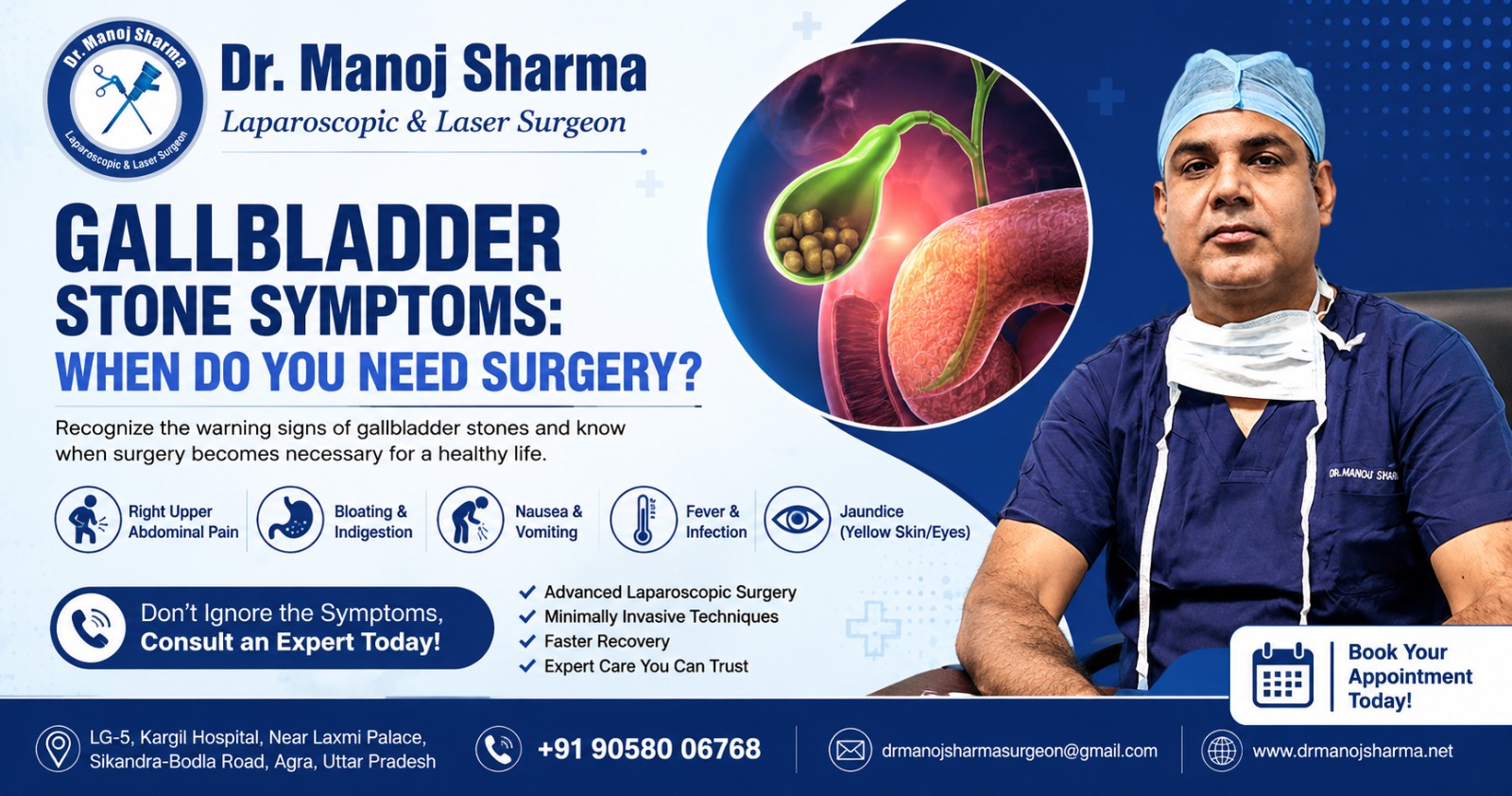
Gallbladder Stone Symptoms: When Do You Need Surgery?
Dr Manoj Sharma2026-05-19T11:13:00+00:00Gallbladder stones are becoming increasingly common due to unhealthy eating habits, obesity, stress, and sedentary lifestyles. Many people ignore early symptoms like bloating, acidity, or mild abdominal pain, assuming they are simple digestion issues. However, untreated gallstones can eventually lead to severe pain, infection, and emergency complications.
If you frequently experience pain in the upper right abdomen, discomfort after meals, nausea, or digestive problems, it may indicate gallbladder stones. Early diagnosis and timely treatment from an experienced laparoscopic surgeon can help prevent serious complications.
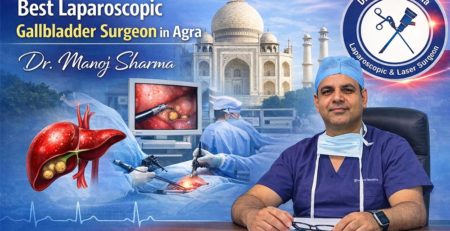
Dr. Manoj Sharma provides advanced minimally invasive treatment for gallbladder conditions using modern laparoscopic surgical techniques in Agra.
What Are Gallbladder Stones?
The gallbladder is a small organ located beneath the liver. Its primary function is to store bile, a digestive fluid that helps break down fats.
Gallstones form when substances such as cholesterol or bilirubin harden inside the gallbladder. These stones may remain silent for years, but in many cases, they begin causing pain and digestive problems over time.
Gallstones can vary in size:
- Small grain-like stones
- Multiple tiny stones
- Large stones causing blockage
Once symptoms begin, medical evaluation becomes important.
Common Gallbladder Stone Symptoms
Many patients experience symptoms repeatedly before they realize the actual cause. Below are some of the most common warning signs.
Pain in the Upper Right Abdomen
This is the most common symptom of gallstones.
The pain usually:
- Occurs in the upper right side of the abdomen
- Starts after eating oily or heavy meals
- May spread to the back or right shoulder
- Can last from a few minutes to several hours
Some patients experience sudden severe pain known as a “gallbladder attack.”
Bloating and Indigestion
Gallstones often interfere with digestion, especially after fatty meals.
Symptoms may include:
- Gas
- Bloating
- Heaviness
- Acidity
- Feeling uncomfortable after eating
These symptoms are frequently mistaken for simple digestive issues.
Nausea and Vomiting
Repeated nausea or vomiting, particularly after meals, can be associated with gallbladder inflammation or blockage caused by stones.
Pain After Eating Oily Food
Patients commonly notice worsening symptoms after:
- Fried food
- Spicy food
- Fast food
- High-fat meals
This happens because the gallbladder contracts during digestion, triggering pain when stones are present.
Fever and Infection
If gallstones cause infection, symptoms may include:
- Fever
- Chills
- Severe abdominal pain
- Weakness
This condition requires immediate medical attention.
Jaundice
When a gallstone blocks the bile duct, patients may develop:
- Yellow eyes
- Yellow skin
- Dark urine
This can become a serious complication and should never be ignored.
Who Is at Higher Risk of Gallstones?
Certain factors increase the risk of developing gallbladder stones.
Common Risk Factors
- Obesity
- High cholesterol
- Diabetes
- Pregnancy
- Age above 40
- Sedentary lifestyle
- Family history
- Rapid weight loss
Women are generally more prone to gallstones than men.
When Is Gallbladder Surgery Necessary?
Not every gallstone requires surgery immediately. However, surgery is usually recommended when symptoms become frequent or complications develop.
Surgery May Be Needed If:
You Have Repeated Pain Attacks
Frequent abdominal pain indicates that the stones are affecting normal gallbladder function.
There Is Gallbladder Infection
Untreated infection can become dangerous and may require emergency treatment.
Stones Block the Bile Duct
This can lead to jaundice, liver problems, or pancreatitis.
Digestion Problems Continue
Persistent bloating, nausea, or discomfort despite medication may require surgical treatment.
Emergency Symptoms Appear
Sudden severe pain with fever or vomiting should never be ignored.
What Is Laparoscopic Gallbladder Surgery?
Laparoscopic surgery is the most commonly recommended treatment for symptomatic gallstones.
This minimally invasive procedure involves:
- Small incisions instead of large cuts
- Use of a camera and specialized instruments
- Faster healing
- Less pain
- Short hospital stay
Compared to traditional open surgery, laparoscopic surgery offers a safer and more comfortable recovery experience for most patients.
Benefits of Laparoscopic Gallbladder Surgery
Faster Recovery
Most patients resume normal activities within a short period.
Minimal Pain
Small incisions cause significantly less discomfort compared to open surgery.
Smaller Scars
Cosmetic results are usually much better.
Reduced Hospital Stay
Many patients are discharged within 24 hours.
Lower Risk of Infection
Smaller wounds reduce infection risk and promote faster healing.
Doctor Insight
Many patients continue suffering from repeated gallbladder symptoms for months or even years because they mistake the pain for acidity or gastric issues.
Ignoring gallstones can increase the risk of:
- Infection
- Bile duct blockage
- Pancreatitis
- Emergency surgery
Timely consultation with an experienced laparoscopic surgeon helps prevent complications and ensures better long-term recovery.
How Are Gallstones Diagnosed?
Doctors usually recommend the following tests:
- Ultrasound abdomen
- Blood tests
- Liver function tests
- CT scan (in selected cases)
Ultrasound is considered one of the most effective methods for diagnosing gallstones.
Recovery After Gallbladder Surgery
Recovery after laparoscopic surgery is generally quick.
Most patients:
- Walk within a few hours
- Return home within 1 day
- Resume light activities within a week
- Recover fully within 2–3 weeks
Recovery time may vary depending on individual health conditions.
Tips to Prevent Gallbladder Stones
Although not all gallstones can be prevented, healthy lifestyle habits can reduce the risk.
Prevention Tips
- Eat a balanced diet
- Avoid excessive oily foods
- Maintain healthy body weight
- Exercise regularly
- Drink enough water
- Avoid sudden crash dieting
Frequently Asked Questions (FAQs)
Can gallstones go away without surgery?
Small asymptomatic stones may not require immediate treatment, but symptomatic gallstones usually need surgical management.
Is laparoscopic gallbladder surgery safe?
Yes, laparoscopic surgery is considered a safe and widely performed minimally invasive procedure.
Can I live normally without a gallbladder?
Yes. Most patients live completely normal lives after gallbladder removal.
How long does surgery recovery take?
Most patients recover within a few weeks and resume routine activities quickly.
Is gallstone pain constant?
No. Pain often comes in episodes, especially after heavy meals.
Book a Consultation for Gallbladder Stone Treatment in Agra
If you are experiencing symptoms of gallbladder stones, timely diagnosis and treatment can help prevent serious complications.
Dr. Manoj Sharma offers modern laparoscopic treatment with a patient-focused approach in Agra.
Dr. Manoj Sharma
Kargil Hospital
Sikandra-Bodla Road, Near Laxmi Palace,
Sulabh Puram Colony, Sikandra,
Agra, Uttar Pradesh 282007, India
Phone: +91 90580 06768
Email: info@drmanojsharma.net
Hours: Mon-Wed 11:00 AM to 4:00 PM, Fri-Sun 11:00 AM to 4:00 PM, Thursday Closed.



Leave a Reply