
Best Laparoscopic Surgeon in Agra: Advanced Laparoscopic Surgery & Treatment Guide
Digvijay Singh2026-09-26T09:45:44+00:00When surgery is recommended, patients naturally want to know about safety, recovery, pain, hospital care and the experience of the surgeon performing the procedure. With advances in modern surgical techniques, laparoscopic surgery has become an important option for many abdominal and general surgical conditions.
For patients searching for the best laparoscopic surgeon in Agra, understanding the procedure, its benefits and the factors that matter when choosing a surgeon can make the consultation process easier.
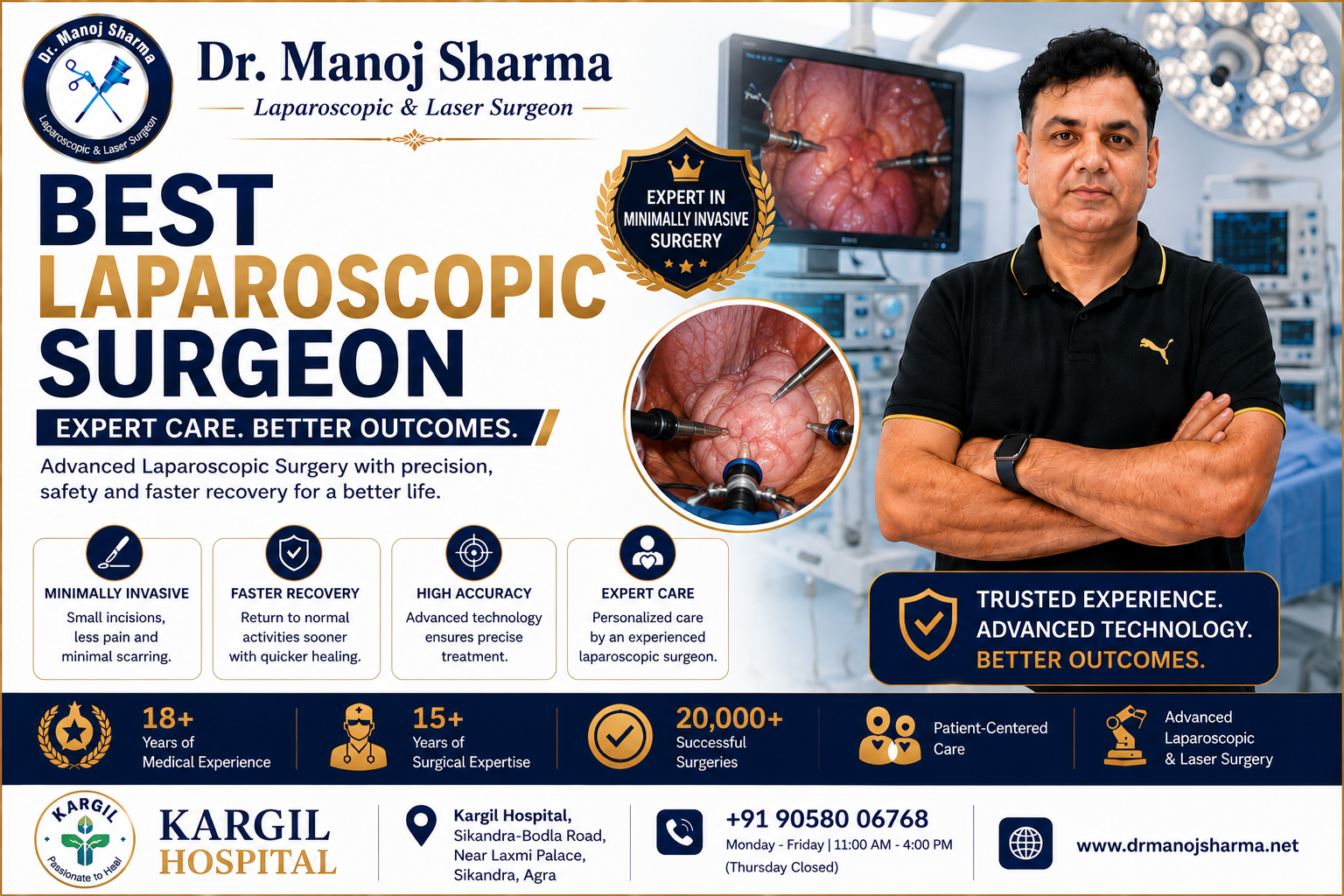
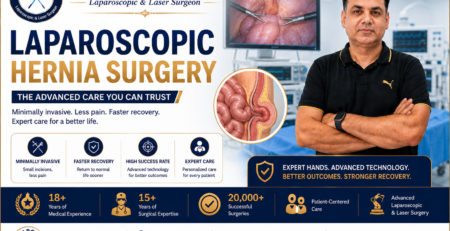
Dr. Manoj Sharma is a Laparoscopic & Laser Surgeon practicing at Kargil Hospital, Sikandra, Agra. His website lists more than 18 years of medical experience, 15+ years of surgical expertise and 20,000+ successful surgeries. His surgical practice includes laparoscopic procedures for conditions such as gallbladder stones, hernia and appendix, along with laser treatment for piles.
What Is Laparoscopic Surgery?
Laparoscopic surgery is a minimally invasive surgical technique in which specialized instruments and a camera are introduced through small incisions.
The camera provides the surgeon with a magnified view of the operating area, allowing the procedure to be performed through smaller access points compared with many traditional open surgeries.
Depending on the condition and individual patient factors, laparoscopic surgery may offer benefits such as:
- Smaller surgical incisions
- Less tissue disruption
- Reduced postoperative discomfort in many cases
- Shorter hospital stay for suitable procedures
- Faster return to normal activities in appropriate patients
- Smaller or less noticeable scars
However, the suitability of laparoscopic surgery depends on the patient’s condition, medical history, previous surgeries and other clinical factors. The final surgical approach should always be decided after an appropriate medical evaluation.
Why Choose an Experienced Laparoscopic Surgeon in Agra?
Choosing a surgeon is an important part of preparing for any operation. Experience is one factor, but patients should also consider the surgeon’s training, the hospital infrastructure, the surgical team’s support, anesthesia facilities, postoperative monitoring and follow-up care.
An experienced laparoscopic surgeon should explain:
- What condition is being treated
- Whether surgery is actually required
- Which surgical options are available
- Why laparoscopic surgery may or may not be suitable
- Expected recovery and follow-up
- Possible risks and complications
- What preparation is required before surgery
The goal should not simply be to find a doctor using the word “laparoscopic.” Patients should have a clear understanding of their diagnosis and treatment options before making a surgical decision.
Laparoscopic Surgery in Agra for Common Conditions
Laparoscopic techniques are used for a variety of surgical conditions. At Kargil Hospital in Agra, Dr. Manoj Sharma’s practice information highlights laparoscopic treatment for several common general surgical problems.
1. Laparoscopic Gallbladder Surgery in Agra
Gallbladder stones can cause abdominal pain, nausea, vomiting, indigestion and other symptoms.
When gallstones cause recurrent symptoms or complications and surgery is recommended, laparoscopic gallbladder surgery may be considered.
The procedure is commonly known as laparoscopic cholecystectomy. It involves removing the gallbladder through small incisions rather than a traditional large abdominal incision.
Patients searching for a laparoscopic gallbladder surgeon in Agra should discuss their ultrasound findings, symptoms, medical history and available treatment options during consultation.
2. Laparoscopic Hernia Surgery in Agra
A hernia occurs when an internal tissue or organ pushes through a weak area in the surrounding muscle or tissue.
Hernias can occur in different areas, including the groin and abdominal wall. Symptoms may include a visible bulge, discomfort or pain that becomes more noticeable during coughing, lifting or physical activity.
Depending on the type and size of the hernia, laparoscopic hernia repair may be an appropriate treatment option.
Dr. Manoj Sharma’s website lists laparoscopic hernia surgery among his areas of surgical practice in Agra.
3. Laparoscopic Appendix Surgery
Appendicitis can require urgent surgical assessment and, when surgery is indicated, appendectomy may be performed using a laparoscopic approach in suitable patients.
Laparoscopic appendectomy generally uses small incisions and a camera-assisted technique.
Anyone experiencing severe or worsening abdominal pain, particularly when accompanied by fever, vomiting or other concerning symptoms, should seek prompt medical evaluation rather than delaying treatment.
4. Minimally Invasive Surgery
Laparoscopic surgery is part of the broader category of minimally invasive surgery.
The purpose of minimally invasive techniques is to achieve the required surgical treatment while limiting the size of the surgical access wherever medically appropriate.
Modern laparoscopic procedures require specialized equipment, surgical expertise and appropriate hospital support.
Laparoscopic Surgery vs Open Surgery
Patients often ask whether laparoscopic surgery is always better than open surgery.
There is no single answer for every patient.
Laparoscopic surgery may provide advantages in selected procedures, but open surgery can still be appropriate or necessary depending on the patient’s diagnosis, anatomy, previous operations, complications and other factors.
A qualified surgeon should assess the individual case before recommending the surgical technique.
The right question is not simply:
“Is laparoscopic surgery better?”
Instead, patients should ask:
“Which surgical approach is safest and most appropriate for my condition?”
What Should You Check Before Choosing a Laparoscopic Surgeon?
If you are searching online for the best laparoscopic surgeon in Agra, consider these practical factors before making your decision:
Surgical Experience
Ask about the surgeon’s experience with the specific procedure you may require, rather than looking only at total years of medical practice.
Qualifications and Training
Check the surgeon’s professional qualifications and relevant surgical training.
Dr. Manoj Sharma’s website identifies him as M.S., FAIS and FICS and describes his focus on laparoscopic and general surgery.
Hospital Infrastructure
Surgery is not performed by the surgeon alone. Proper operation theatre facilities, anesthesia support, trained nursing staff, sterilization systems and postoperative care are important parts of surgical treatment.
Clear Diagnosis
A good consultation should begin with understanding the patient’s condition. Depending on the problem, this may involve physical examination, imaging, blood tests or other investigations.
Transparent Treatment Planning
Patients should understand why surgery is being recommended, what alternatives may exist, what recovery could involve and what potential risks should be considered.
Why Patients Search for a Laparoscopic Surgeon in Agra
Agra is a major healthcare destination for patients from the city as well as nearby areas.
For patients who need surgical treatment, having consultation, surgery and follow-up care in the same city can make the overall treatment process more convenient.
Dr. Manoj Sharma consults at Kargil Hospital on Sikandra-Bodla Road, near Laxmi Palace, Sikandra, Agra. The practice website currently lists the hospital location and appointment contact details.
Advanced Laparoscopic & Laser Surgical Care at Kargil Hospital
Dr. Manoj Sharma’s practice focuses on laparoscopic, minimally invasive and laser-based surgical treatments.
The procedures highlighted on the practice website include:
- Laparoscopic hernia surgery
- Laparoscopic gallbladder surgery
- Appendix surgery
- Minimally invasive surgery
- Laser piles treatment
The website lists 18+ years of medical experience, 15+ years of surgical expertise and 20,000+ successful surgeries.
Every patient’s treatment plan should be individualized according to their diagnosis, medical history and overall health.
When Should You Consult a Laparoscopic Surgeon?
You may consider a surgical consultation if you have been diagnosed with a condition that may require surgery or if you are experiencing symptoms such as:
- Persistent abdominal pain
- A swelling or bulge suggestive of hernia
- Recurrent pain associated with gallstones
- Symptoms of appendicitis
- Recurrent piles or related symptoms
- A condition for which another doctor has recommended surgery
A consultation does not necessarily mean that surgery will be required. The purpose of consultation is to understand the condition and discuss appropriate treatment options.
Consult an Experienced Laparoscopic Surgeon in Agra
Finding the right surgeon is an important decision. Patients should consider qualifications, procedure-specific experience, hospital support, diagnosis, treatment options and postoperative care rather than relying on a single factor.
For patients looking for the best laparoscopic surgeon in Agra, Dr. Manoj Sharma provides laparoscopic and minimally invasive surgical care at Kargil Hospital, Sikandra, Agra.
With 18+ years of medical experience, 15+ years of surgical expertise and 20,000+ successful surgeries listed on his practice website, Dr. Manoj Sharma focuses on advanced laparoscopic and laser surgical care.
For consultation:
Dr. Manoj Sharma
Laparoscopic & Laser Surgeon
Kargil Hospital
Sikandra-Bodla Road, Near Laxmi Palace, Sikandra, Agra
Phone: +91 90580 06768
Website: drmanojsharma.net
Frequently Asked Questions
Who is a laparoscopic surgeon?
A laparoscopic surgeon is a surgeon trained to perform selected surgical procedures using minimally invasive, camera-assisted techniques.
What is laparoscopic surgery?
Laparoscopic surgery uses small incisions and specialized instruments, including a camera, to perform certain surgical procedures.
Is laparoscopic surgery suitable for everyone?
No. Suitability depends on the patient’s diagnosis, anatomy, medical history, previous surgeries and other clinical factors.
Is laparoscopic surgery less painful than open surgery?
Many laparoscopic procedures are associated with less postoperative pain than comparable open procedures, but the amount of pain and recovery varies by procedure and patient.
Which conditions can be treated with laparoscopic surgery?
Depending on the individual case, laparoscopic techniques may be used for procedures involving conditions such as gallbladder stones, hernia and appendicitis.
How do I choose the best laparoscopic surgeon in Agra?
Consider the surgeon’s qualifications, experience with the specific procedure, hospital infrastructure, diagnosis, treatment options, patient safety practices and postoperative follow-up.






Leave a Reply