
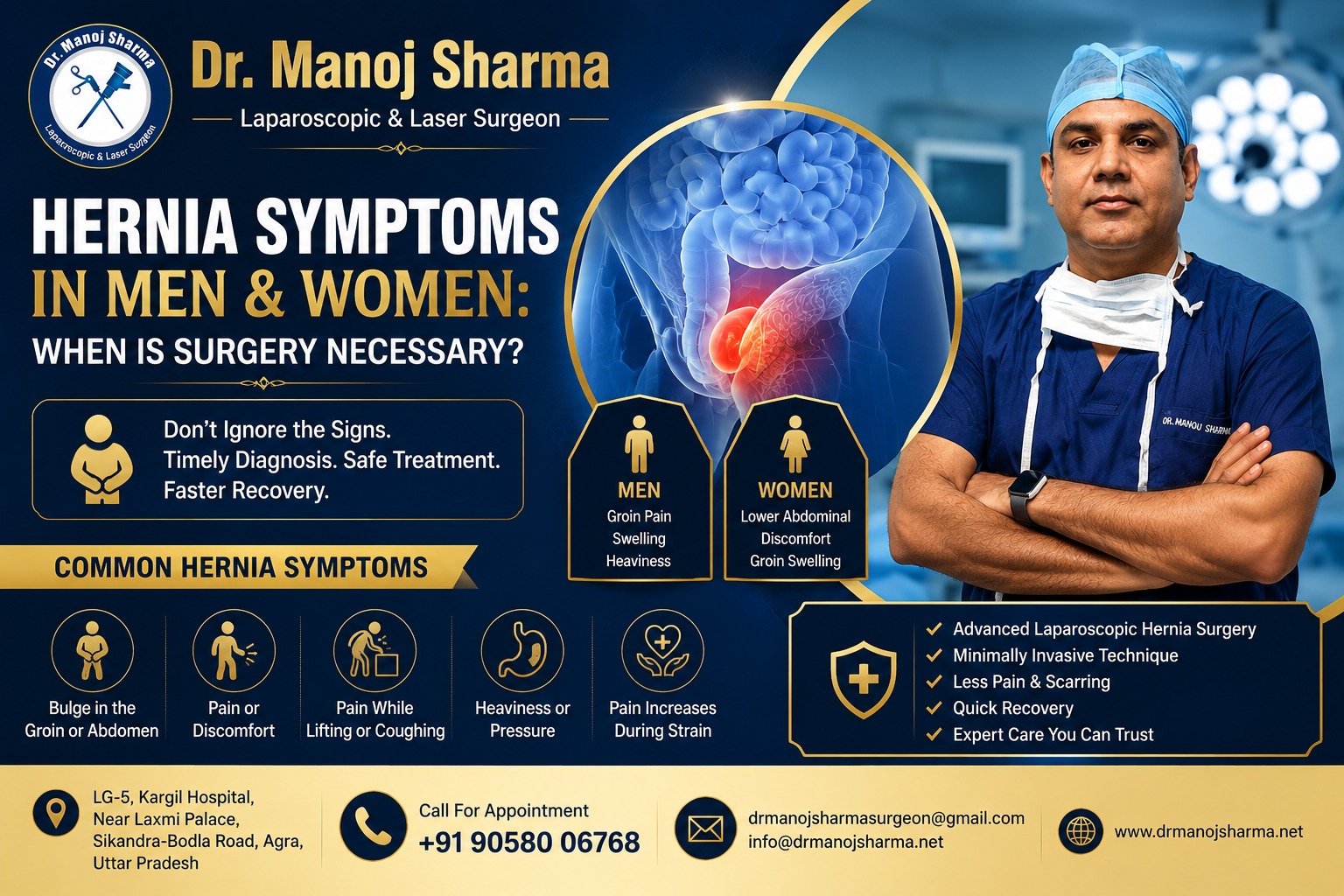
Hernia Symptoms in Men & Women: When Is Surgery Necessary?
axiom2026-05-29T09:50:43+00:00Hernia is a common medical condition that affects both men and women, yet many people ignore the early symptoms until the pain and swelling become severe. In many cases, patients continue treating the discomfort as simple muscle strain, gas, or weakness, which delays proper diagnosis and treatment.
A hernia does not heal on its own. Over time, it can gradually increase in size and may lead to serious complications if left untreated.
Understanding the warning signs early and consulting an experienced laparoscopic surgeon can help prevent pain, emergency complications, and prolonged discomfort.
Dr. Manoj Sharma provides advanced minimally invasive hernia treatment using modern laparoscopic surgical techniques in Agra.
What Is a Hernia?
A hernia occurs when an internal organ or tissue pushes through a weak area in the muscle or abdominal wall.
The condition most commonly develops in:
- Abdomen
- Groin
- Upper stomach area
- Previous surgical incision sites
Hernias can affect people of all ages, but they are more common in adults, especially those involved in heavy lifting, obesity, chronic coughing, or physically demanding activities.
Common Types of Hernia
Understanding the different types of hernia helps patients identify symptoms early.
- Inguinal Hernia
This is the most common type and usually occurs in the groin area.
It is more common in men and may cause:
- Groin swelling
- Bulge near the testicle
- Pain while lifting or coughing
- Umbilical Hernia
This type develops near the belly button.
It may occur in:
- Adults
- Obese individuals
- Pregnant women
- Incisional Hernia
This develops at the site of a previous surgery where abdominal muscles become weak.
- Hiatal Hernia
Occurs when part of the stomach pushes upward into the chest cavity.
Symptoms may include:
- Acid reflux
- Chest discomfort
- Indigestion
Hernia Symptoms in Men
Men commonly experience hernias in the groin region.
Common Symptoms in Men
Groin Bulge
A visible swelling or lump is often the first sign.
Pain During Physical Activity
Pain may worsen while:
- Lifting heavy objects
- Exercising
- Coughing
- Standing for long periods
Heaviness in the Groin
Many patients describe a pulling or dragging sensation.
Burning or Discomfort
Some patients experience mild burning pain around the swelling.
Inguinal hernia is significantly more common in men because of natural weakness in the groin area.
Hernia Symptoms in Women
Hernia symptoms in women can sometimes be more difficult to recognize.
Common Symptoms in Women
Lower Abdominal Pain
Pain may occur during daily activities or physical exertion.
Pelvic Discomfort
Women may feel pressure or heaviness in the pelvic region.
Groin Swelling
A small bulge may appear, especially while standing.
Pain During Straining
Symptoms often worsen while coughing, bending, or lifting.
Because symptoms can resemble gynecological issues, hernias in women are sometimes diagnosed late.
Early Warning Signs You Should Not Ignore
Many hernia patients ignore symptoms for months. However, early diagnosis is important because hernias tend to enlarge gradually.
Warning Signs Include:
- Swelling in the abdomen or groin
- Pain while lifting objects
- Burning sensation
- Discomfort after prolonged standing
- Pressure or heaviness
- Pain during coughing or sneezing
These symptoms may initially appear mild but often worsen over time.
Can a Hernia Heal Without Surgery?
No. A hernia does not heal naturally with medicines or exercise.
Temporary relief may occur with:
- Rest
- Pain medication
- Hernia belts
However, the weakness in the abdominal wall remains present.
Over time, untreated hernias may:
- Increase in size
- Cause more pain
- Become difficult to repair
- Lead to emergency complications
This is why surgical treatment is often recommended.
When Is Hernia Surgery Necessary?
Surgery is usually advised when:
- Pain becomes frequent
- The swelling increases
- Daily activities are affected
- The hernia becomes non-reducible
- Complications develop
Early surgical treatment often provides better recovery and reduces long-term risks.
Emergency Symptoms of Hernia
In some cases, a hernia may become trapped or strangulated, which is considered a medical emergency.
Seek Immediate Medical Attention If You Experience:
- Sudden severe pain
- Vomiting
- Redness over the swelling
- Fever
- Swelling that cannot be pushed back
- Severe abdominal tenderness
Ignoring these symptoms can become dangerous.
What Is Laparoscopic Hernia Surgery?
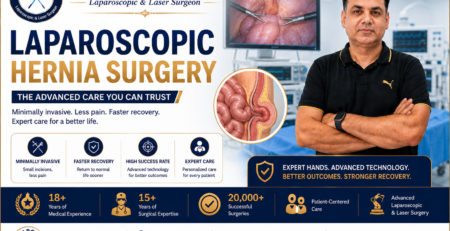
Laparoscopic hernia surgery is an advanced minimally invasive procedure used to repair the weakness in the abdominal wall.
Instead of a large cut, the surgery is performed through small incisions using:
- A laparoscope (camera)
- Specialized instruments
- Surgical mesh support
This modern technique offers faster recovery and less pain compared to traditional open surgery.
Benefits of Laparoscopic Hernia Surgery
Smaller Incisions
Tiny cuts help reduce visible scarring.
Less Pain
Post-operative discomfort is significantly lower.
Faster Recovery
Patients usually return to normal activities much sooner.
Short Hospital Stay
Many patients go home within a short period after surgery.
Lower Infection Risk
Smaller wounds reduce the chances of infection.
Early Return to Work
Working professionals often prefer laparoscopic surgery because of quicker recovery.
Open Hernia Surgery vs Laparoscopic Surgery
Feature | Laparoscopic Surgery | Open Surgery |
Incision Size | Small | Large |
Pain | Less | More |
Recovery Time | Faster | Slower |
Hospital Stay | Short | Longer |
Scarring | Minimal | More Visible |
Return to Work | Earlier | Delayed |
Because of these advantages, minimally invasive surgery has become increasingly preferred.
Recovery After Hernia Surgery
Recovery depends on:
- Hernia type
- Patient health
- Surgical technique
Most laparoscopic surgery patients:
- Walk within hours
- Resume light activities within days
- Return to work sooner than open surgery patients
Heavy lifting may need temporary restriction as advised by the surgeon.
Doctor Insight
Many patients continue tolerating hernia symptoms because the swelling initially disappears while lying down. However, hernias gradually enlarge over time.
Delaying surgery can increase:
- Pain
- Surgical complexity
- Recovery duration
- Risk of emergency complications
Early diagnosis and timely laparoscopic treatment usually provide better long-term results and faster recovery.
Who Is at Higher Risk of Hernia?
Risk factors include:
- Heavy lifting
- Obesity
- Chronic coughing
- Smoking
- Constipation
- Previous abdominal surgery
- Weak abdominal muscles
Maintaining healthy body weight and avoiding excessive strain may help reduce risk.
Frequently Asked Questions (FAQs)
Is hernia dangerous if untreated?
Yes. Untreated hernias may enlarge and sometimes lead to emergency complications.
Can medicines cure a hernia?
No. Medicines may temporarily reduce discomfort but cannot repair the abdominal wall defect.
Is laparoscopic hernia surgery safe?
Yes. It is considered a safe and widely performed minimally invasive procedure.
How long does hernia surgery recovery take?
Most patients recover faster after laparoscopic surgery and resume routine activities within a few weeks.
Can hernia come back after surgery?
Recurrence risk is lower with proper surgical repair and post-operative care
Book Your Consultation
If you are experiencing swelling, groin pain, abdominal discomfort, or symptoms of hernia, early medical consultation can help prevent complications and improve recovery.
Dr. Manoj Sharma offers advanced laparoscopic hernia treatment with modern patient-focused surgical care in Agra.
📍 LG-5, Kargil Hospital, Near Laxmi Palace, Sikandra-Bodla Road, Agra
📞 +91 90580 06768
🌐 Dr Manoj Sharma Official Website








Leave a Reply